Review: Shell 3D Layered SVG for Embroidery Projects
As a designer who spends most of my day staring at digitized files and thread charts, I approach new assets with a healthy dose of skepticism. We have all downloaded a digital embroidery file that looked stunning in the preview but turned into a bird's nest on the hoop. So, when I pulled up the Shell 3D Layered SVG Cut File Design, my first instinct wasn't to imagine it cut from plywood or cardstock, as the product description suggests for general crafts. Instead, I immediately started visualizing how these layered vectors could translate into a high-quality machine embroidery design for a client's boutique beachwear line.
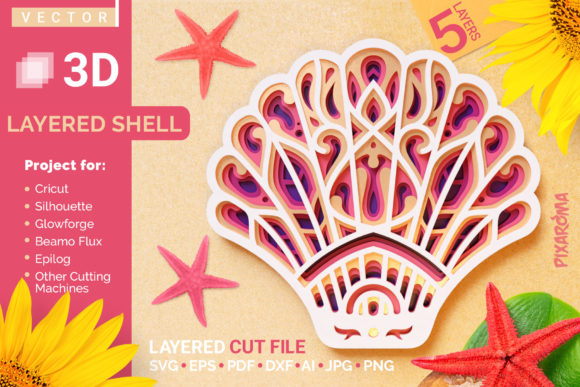
The initial impression of this graphic is its clean, organic flow. The layers are distinct enough to suggest depth without being so complex that they become a nightmare to stitch out. For those of us working in the Crafts and Graphics space, finding a shell motif that doesn't look clip-art-ish is rare. This design carries a mood of coastal relaxation but maintains a structured geometry that appeals to modern aesthetics. It feels less like a generic souvenir icon and more like a deliberate design element suitable for upscale handmade products.
Translating Vector Layers into Stitch
The real test for any SVG intended for embroidery is how well the layers hold up when converted from cut lines to stitch paths. In a recent project, I was tasked with creating a custom tote bag design for a local surf shop's summer collection. They wanted something that felt tactile and premium. I took the Shell 3D Layered SVG Cut File Design and used it as the foundation for an appliqué project.
Because the file is built with clear separation between the shell's ridges and the base shape, it made for an excellent template. I used a tight satin stitch to outline the outermost layer, securing a piece of textured linen over a cotton canvas bag. The inner layers were filled with a lighter density fill stitch to create a subtle tonal variation. The result was a finished product that looked incredibly professional. The "3D" aspect of the original cut file translated beautifully into physical dimension through fabric stacking and thread build-up.
This versatility makes it a strong candidate for various embroidery projects. Whether you are doing sweatshirt embroidery where you need bold shapes that won't get lost in fleece, or delicate baby embroidery on a onesie where soft edges are crucial, the scalability of this graphic is a major plus. However, the key is in the preparation. You cannot simply drop an SVG into your embroidery software and expect magic; you must define your stitch types carefully.
Real-World Application and Customer Appeal
Let's talk about the end user. If you are an Etsy seller or run a small shop product line, visual appeal drives sales. A shell design that looks flat and lifeless won't command a high price point. However, when you use a layered approach inspired by this file, you increase the perceived value of the item. I recently mocked up a personalized gift concept using this design on a navy blue kitchen towel. By using a contrasting thread color for the top layer and a slightly darker shade for the under-layers, the design popped with a sophistication that customers love.
For commercial embroidery jobs, consistency is king. This design's symmetry ensures that whether you are stitching one patch or fifty, the alignment remains predictable. It works exceptionally well for embroidered patches intended for caps or jackets. The defined edges allow for a clean merrow border or a tight satin finish that withstands wear and tear. When a customer sees a design with this level of clarity, it builds trust in your brand. It signals that you care about the details, which is essential for retaining clients in the competitive world of custom apparel.
Navigating Fabric and Hoop Challenges
While the design is robust, it is not without its challenges. As with any detailed graphic, context matters. If you are planning to stitch this onto a stretchy fabric like a thin t-shirt, you need to be vigilant about your stabilizer choice. The layered nature of the shell means there will be multiple passes of the needle, which can cause puckering if the fabric isn't supported correctly. I always recommend testing on scrap fabric first, especially if you are attempting this on a curved surface like a cap.
Small hoop sizes can also be tricky. While the design scales well, shrinking it too much might cause the inner layers to merge, losing that crisp "3D" effect that makes the file special. If you are working with dark fabric, ensure your thread colors have enough contrast. A light beige on black works, but a tone-on-tone approach might render the layers invisible unless you rely heavily on texture rather than color. Also, be mindful of dense stitch areas. If you decide to fill every single layer with heavy stitching, you risk creating a stiff, cardboard-like spot on a garment that should remain soft.
Designer Notes for Best Results
To get the most out of the Shell 3D Layered SVG Cut File Design for embroidery, here are a few practical steps I follow before committing to a final run:
- Check Licensing: Always verify the license terms before selling finished items. Just because a file is available for crafts doesn't automatically grant commercial rights for digital resale or mass-produced goods.
- Mockup Testing: Run black and white mockups to ensure the layers are distinguishable without relying on color. This helps identify if the stitch density needs adjustment.
- Thread Selection: Play with thread textures. A matte thread might blend layers too much, while a high-sheen rayon can exaggerate the depth between levels.
- Fabric Texture: Consider how the fabric texture interacts with the design. A rough canvas might eat up fine details, whereas a smooth twill will showcase the precision of the layers.
- Hoop Size Confirmation: Ensure your chosen hoop size accommodates the full width of the design with enough margin for the frame clamps, especially if adding text around the shell.
Ultimately, this file is a versatile asset. While it is marketed towards paper crafters and woodworkers, its structural integrity makes it a hidden gem for embroiderers willing to put in the digitization legwork. It bridges the gap between a simple icon and a complex piece of art. For creative entrepreneurs looking to expand their design assets with something that feels fresh yet timeless, this shell design offers a solid foundation. Just remember, the file is only as good as the execution. Take the time to refine your stitch settings, respect the material you are working on, and you will end up with a holiday embroidery piece or everyday wearable that stands out in a crowded market.
In conclusion, do not let the "cut file" label limit your creativity. With the right approach, the Shell 3D Layered SVG Cut File Design becomes a powerful tool for creating textured, dimensional embroidery that elevates any craft business. Whether it is for a wedding gift, a nursery decor item, or a line of branded merchandise, the potential is there for those who know how to harness it.